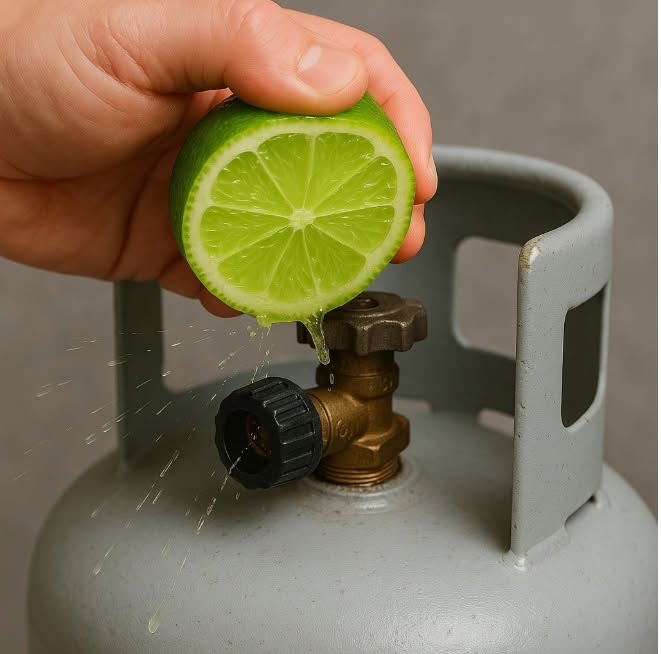
If your gas stove seems to be using more fuel than expected, it is tempting to search for a quick household trick that promises to make the gas last longer. Regular cleaning can certainly help a gas appliance operate more consistently, especially when food residue, grease, or debris has collected around removable burner parts. However, fuel consumption depends on several factors, and no cleaning method can guarantee dramatic savings on its own.
One useful place to start is the condition of the burner flame. A properly operating gas burner commonly produces a steady blue flame. If the flame becomes persistently yellow, orange, uneven, weak, or difficult to ignite, that can indicate contamination around the burner, incorrect burner assembly, restricted airflow, or another combustion or gas-supply problem that may require professional attention.
The original tip recommends lemon as a natural cleaner because its acidity can help loosen some greasy residue on suitable removable surfaces. That can be useful as a cleaning aid, but lemon juice should never be poured into gas hoses, gas valves, injectors, internal gas passages, or other parts of the fuel-supply system. Those components should not be treated like ordinary household drains or kitchen surfaces.
The safest approach