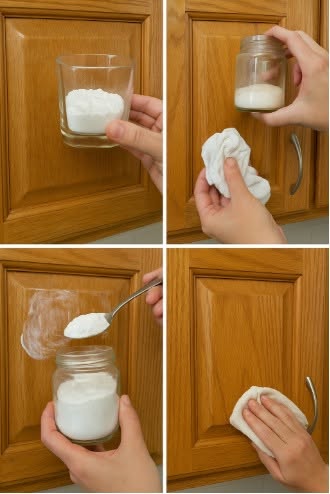
Kitchen cabinets quietly collect grease, dust, cooking residue, fingerprints, and everyday grime. Because this buildup develops gradually, it is easy to overlook until cabinet doors begin to feel sticky, look dull, or show darker patches around handles and cooking areas.
Fortunately, routine cleaning does not always require an aggressive household cleaner. The original article suggests several simple cleaning approaches using familiar ingredients such as white vinegar, Marseille soap, household alcohol, and baking soda. Used carefully and on suitable surfaces, these methods can help loosen greasy residue and restore a cleaner appearance to kitchen cupboards.
The most important point is to match the cleaning method to the cabinet finish. Painted wood, sealed wood, laminate, plastic, lacquered surfaces, and other finishes do not necessarily react in the same way to moisture, alcohol, vinegar, or abrasive materials. Before applying any homemade cleaner widely, check the cabinet manufacturer’s care guidance when available and test the solution on a small, inconspicuous area.
Why Regular Kitchen Cabinet Cleaning Matters
Every time you cook, especially when frying, sautéing, or preparing food near the stovetop, tiny particles of grease can travel through the air and eventually settle on surrounding surfaces.
At first, this residue may be almost invisible.