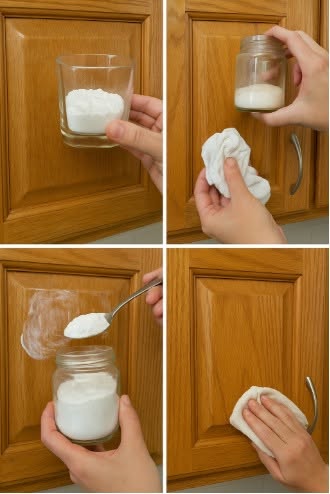
Over time, however, grease combines with airborne dust and ordinary kitchen debris to create a thin sticky film.
Heat and humidity can make that film increasingly difficult to remove. Areas around cabinet handles, above the stovetop, and near frequently used work surfaces often show buildup first because they receive both airborne grease and repeated contact from hands.
If the residue is left in place for a long period, cleaning usually requires more effort. Regular light maintenance is therefore easier than waiting until the surface becomes heavily coated.
Why a Damp Wipe Can Help
The original article recommends wiping cabinets with a damp sponge after use whenever practical.
In everyday life, cleaning every cabinet after every meal may not be realistic. Still, quickly wiping visible splashes and greasy fingerprints before they dry can make weekly cleaning much easier.
A soft cloth that is damp rather than dripping wet is generally preferable because excessive water can seep into joints, edges, unfinished areas, or damaged coatings.
Start With the Gentlest Method
Before reaching for stronger cleaning solutions, remove loose dust and surface debris first.
This simple step prevents dry particles from being rubbed across the cabinet finish during wet cleaning.
Once the surface