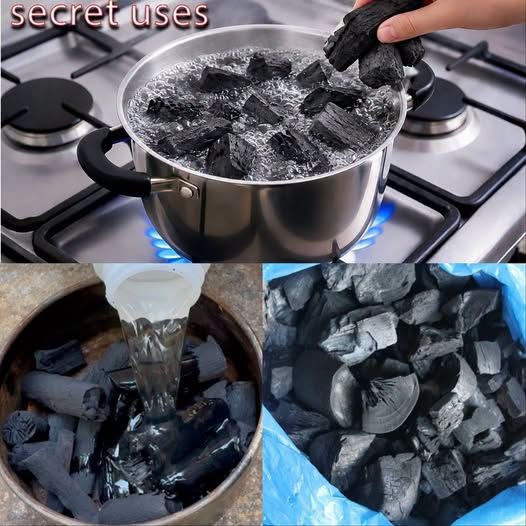
Charcoal is one of those materials people tend to associate with a single purpose—a glowing barbecue on a summer afternoon—yet a plain piece of untreated natural lump charcoal has a surprisingly interesting structure hidden beneath its black surface. Carbon-rich and extremely porous, charcoal has been used for generations in practical household tasks, from absorbing unwanted odors to helping manage moisture around storage areas, and once you understand what those tiny pores can do, an inexpensive bag of charcoal suddenly starts looking less like fuel and more like raw material for several clever household projects.
There is one important detail behind the viral idea of “boiling charcoal,” however: ordinary boiling mainly washes and wets charcoal. Producing commercial activated carbon requires specialized processing that creates a vastly greater internal surface area. For household projects, plain clean charcoal can still be remarkably useful without trying to reproduce that industrial process at home.
And some of the simplest ideas can even be packaged into inexpensive handmade household products.
Start With the Right Charcoal
For these projects, I use only plain, untreated natural lump charcoal.
I avoid barbecue briquettes containing lighter fluid, ignition additives, fragrances, or other ingredients because the charcoal will be used around