The story
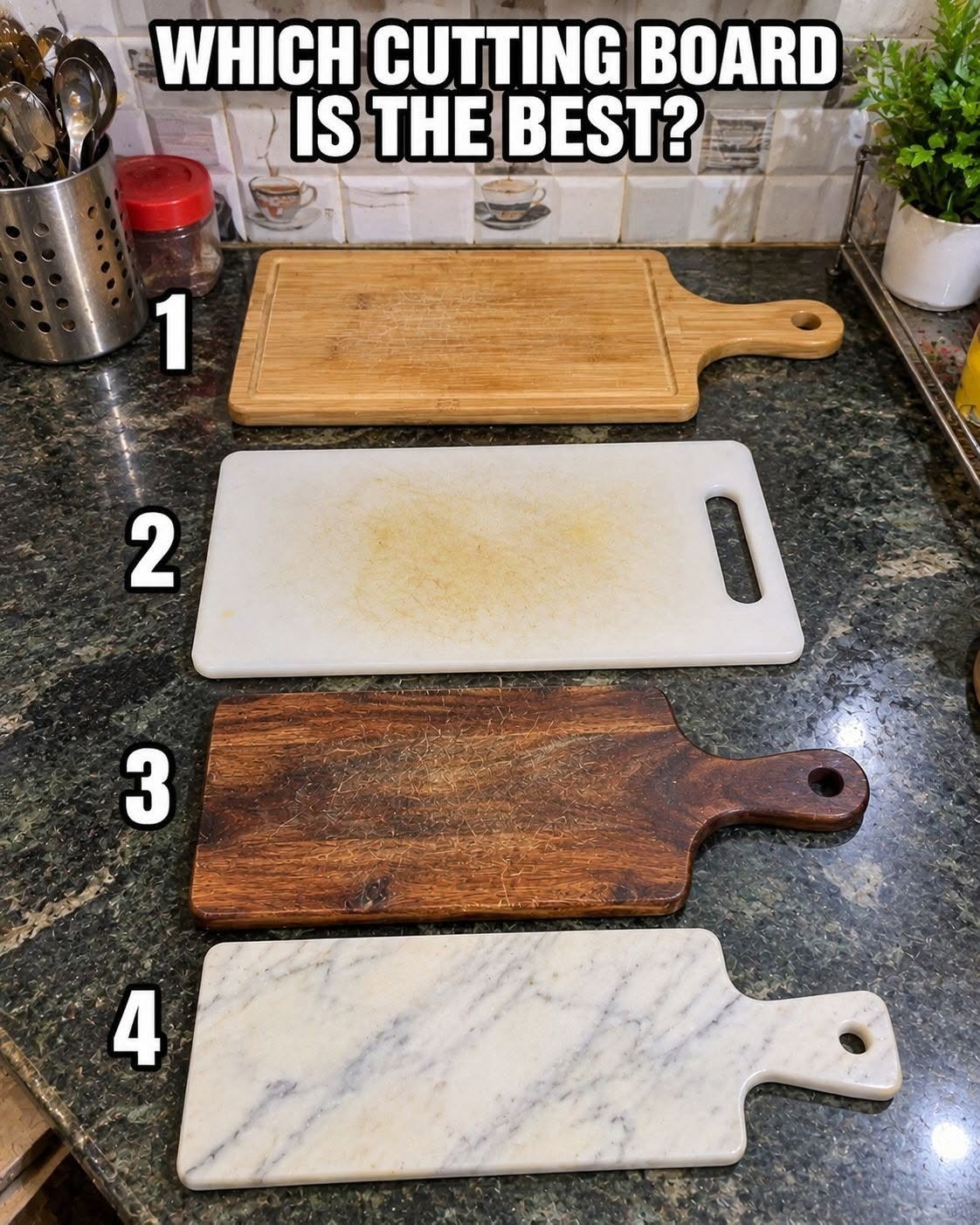
Here is a breakdown of the four common types shown in the image, ranked by why and when they work best:
1. Bamboo Cutting Board (Top)
Why it’s used:
Bamboo is lightweight, eco-friendly, budget-friendly, and absorbs very little moisture.
The Catch:
It is technically a grass and is much harder than traditional hardwoods, which means it can dull your kitchen knife blades faster over time.
2. Plastic Cutting Board (Second)
Why it’s used:
Highly favored for food safety (especially handling raw meat, poultry, and seafood) because it is non-porous and can usually be thrown straight into the dishwasher to sanitize.
The Catch:
It scars and grooves easily from knife cuts. Over time, those deep grooves trap bacteria and require the board to be replaced.
3. Hardwood Cutting Board (Third)
Why it’s used:
Widely considered the best overall choice for home cooks and chefs. Quality hardwood is “self-healing” (knife marks close up over time) and exceptionally gentle on expensive knife blades, keeping your edges sharp much longer.
The Catch:
It requires regular maintenance (hand-washing only and periodic conditioning with food-grade mineral oil).
4. Marble / Stone Cutting Board (Bottom)
Why it’s used:
Excellent for pastry work, rolling out dough (as