century that the four-tine fork became widely adopted—and for good reason.
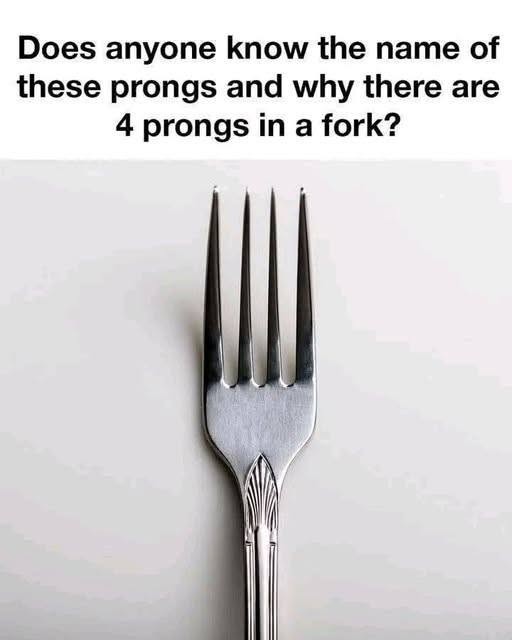
Why Four Tines WonThe shift to four prongs wasn’t random—it was a practical upgrade that made eating easier and more efficient.
Here’s why it works so well:
✅ Better stabilityFour tines create a wider base, making it easier to hold food without it slipping off.
✅ Easier to pierce foodThe evenly spaced prongs allow you to spear everything from soft vegetables to firm meats with less effort.
✅ Built-in cutting abilityWhile not a replacement for a knife, a four-tine fork can help break apart softer foods.
✅ More versatilityFrom pasta to salad to dessert, one fork can handle almost anything on your plate.
It’s Not Just Practical—It’s Visual TooInterestingly, the popularity of four-tine forks isn’t just about function.
Humans naturally prefer symmetry, and the balanced look of four evenly spaced prongs is visually pleasing. Over time, this design became associated with refinement, proper etiquette, and modern dining standards.
In other words, it looks right—and feels right to use.
Not All Forks Are the SameEven though the four-tine fork is the standard, there are still variations designed for specific foods:
Salad forks: Slightly wider tines for leafy greensDessert forks: Smaller and more delicateSeafood forks: