of a sleep-related breathing disorder.
A dentist can also check for cavities, gum problems, mouth sores, and other consequences of reduced saliva production.
Final Thoughts
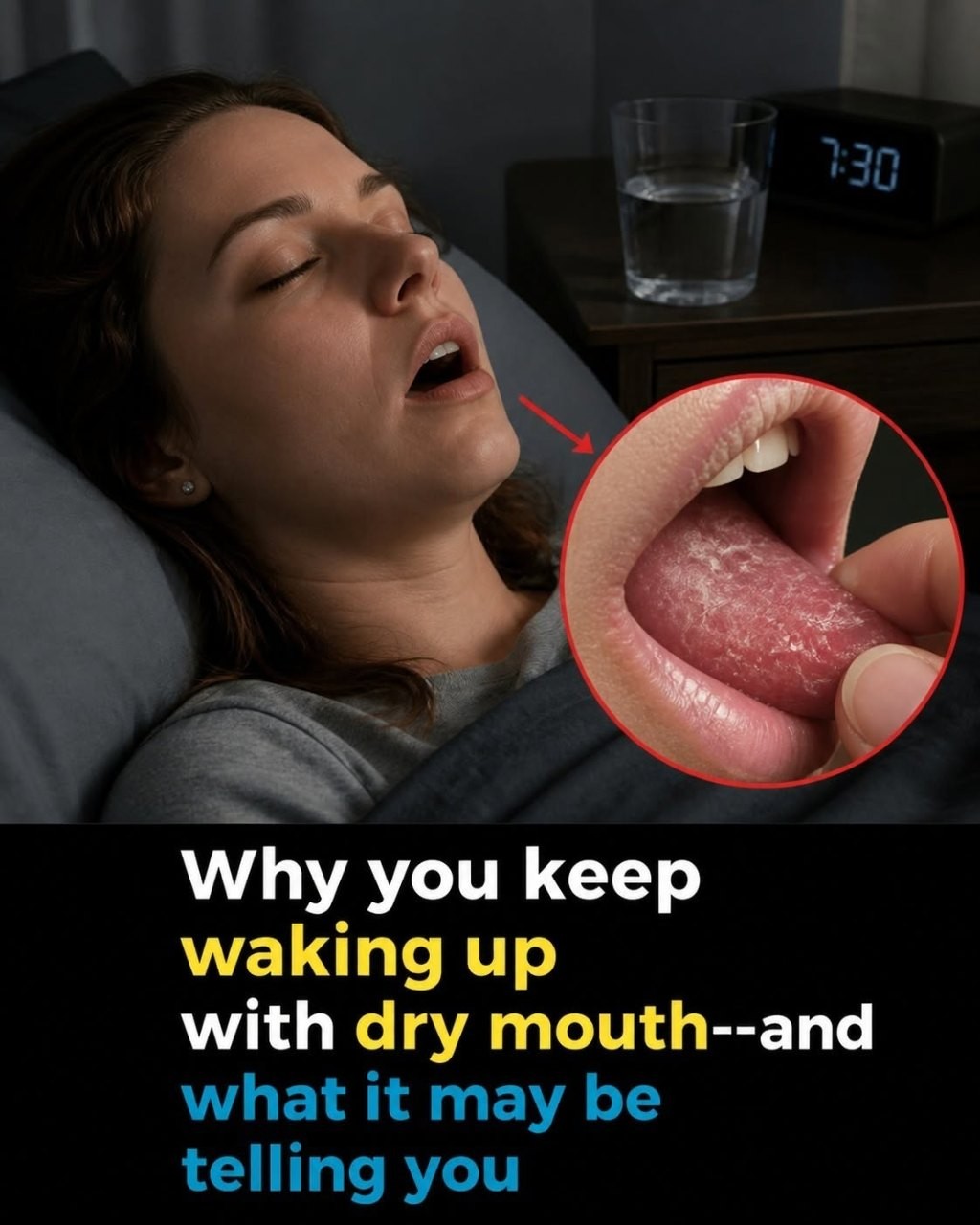
Waking up with a dry mouth does not automatically mean that something is seriously wrong. Dehydration, mouth breathing, nasal congestion, snoring, medications, and the normal reduction in saliva during sleep can all play a role.
However, persistent or severe dryness should not simply be ignored. Paying attention to accompanying symptoms can help identify whether the problem is related to your nighttime habits, medications, oral health, or another underlying issue.
So the next time you wake up reaching for a glass of water, take a moment to notice the bigger picture. Sometimes, your dry mouth is simply asking for more hydration—but when it keeps happening, it may be worth finding out why.