tastes. Tomatoes get crushed. Herbs bruise. Chicken tears instead of cutting clean.
And safety? A dull blade is more likely to skid off food and toward your fingers. Not exactly what anyone wants on a Tuesday night making stir-fry.
So yes, keeping knives in good shape matters. It makes cooking calmer. Less fight, more flow.
The Big Mix-Up: Why Honing and Sharpening Get Confused
Here’s the heart of the problem: we use the word sharp to describe how a knife feels. And honing often makes a knife feel sharper, even though it’s not technically sharpening it.
That’s where the wires get crossed.
So someone uses the rod, the knife cuts better, and naturally they think, “Well, I sharpened it.” Fair enough. From their point of view, something worked.
But what really happened is a little different.
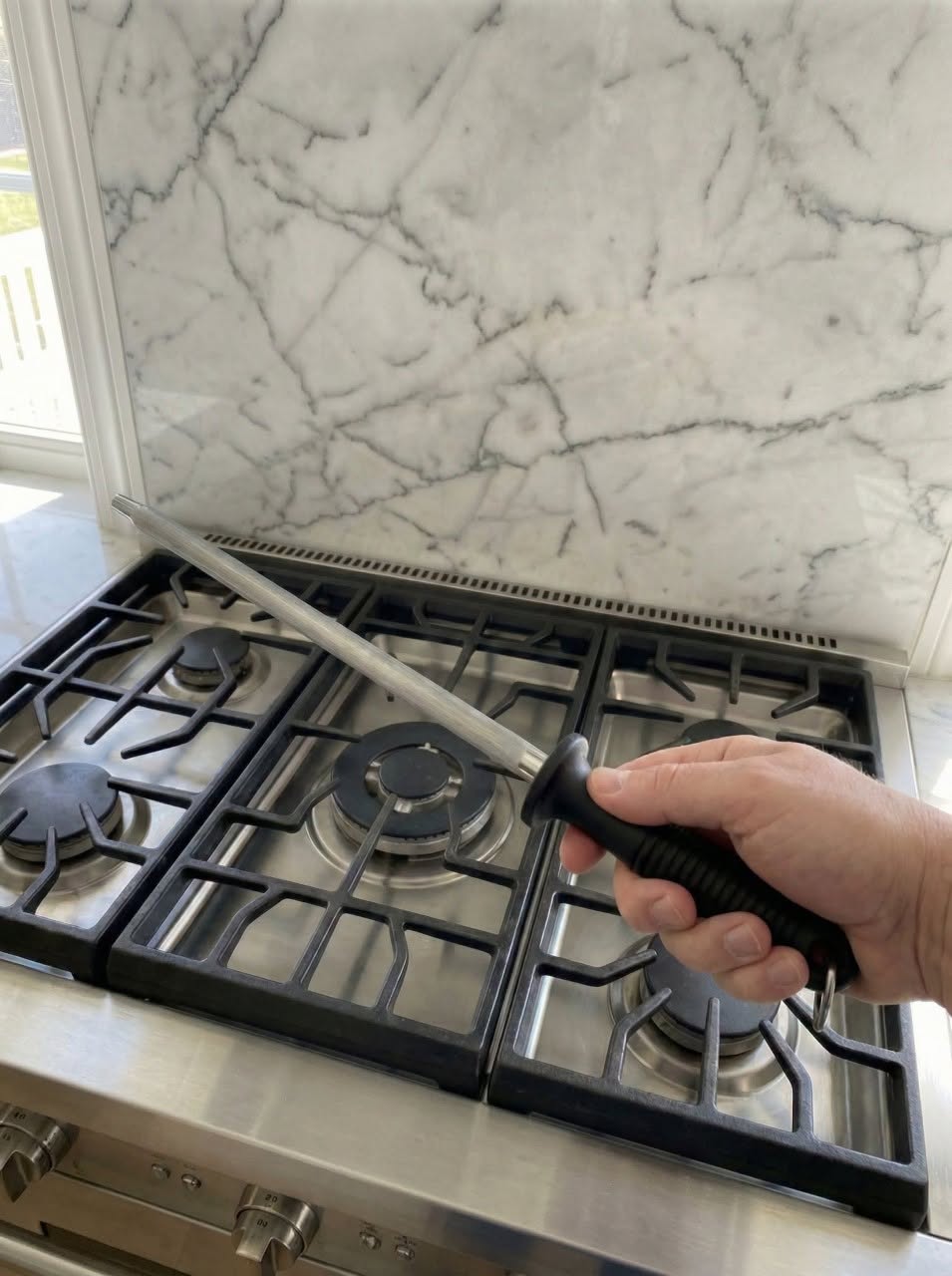
What a Honing Rod Actually Does (Plain and Simple)
Inside every knife edge, there’s a very thin line of metal. Over time, that edge doesn’t just wear down. It also bends. Tiny amounts, but enough to matter.
Picture a row of grass after people have walked through it. The blades are still there, just leaning in different directions.
A honing rod:
Pushes that bent