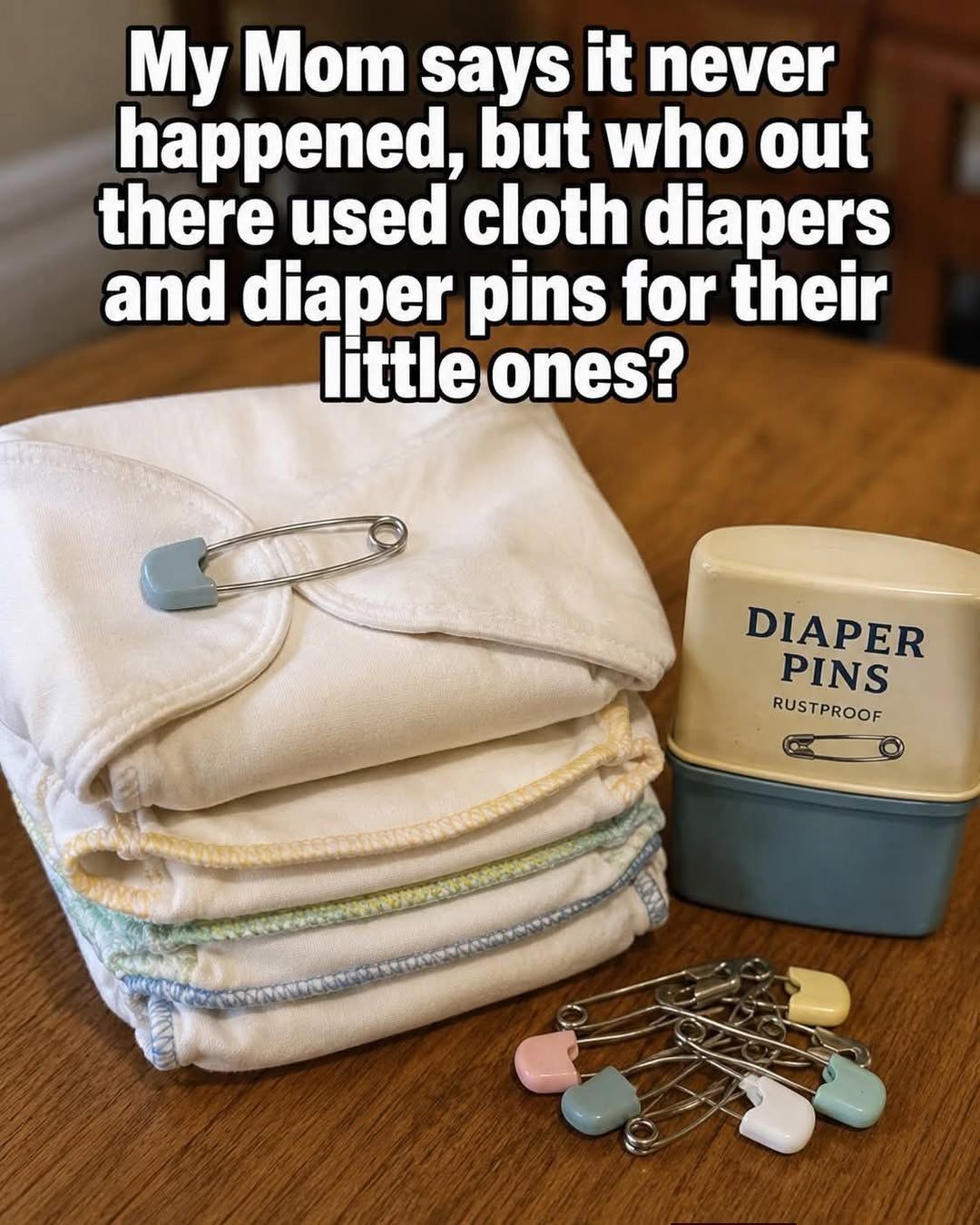
of throwing diapers away after each use, parents washed them, dried them on clotheslines or in dryers, folded them neatly, and stored them until needed again.
3. They Produced Less Waste
Because they were reused hundreds of times, cloth diapers created far less household waste than disposable diapers.
4. They Were Soft and Breathable
Most cloth diapers were made from natural cotton, which many parents appreciated for its softness against a baby’s skin.
How Cloth Diapers Were Used
Step 1: Fold the Diaper
The clean cotton diaper was folded into the desired shape depending on the baby’s age and size.
Step 2: Place the Baby on the Diaper
The baby was laid on the unfolded diaper, and the front section was pulled up between the legs.
Step 3: Secure with Diaper Pins
Large rust-resistant safety pins were carefully inserted through the fabric on each side to keep the diaper snugly in place. Parents took care to keep their fingers between the pin and the baby’s skin while fastening it.
Step 4: Add Waterproof Covers
Many families placed waterproof plastic or vinyl pants over the cloth diaper to help prevent leaks.
Step 5: Wash and Reuse
After use, the diapers were