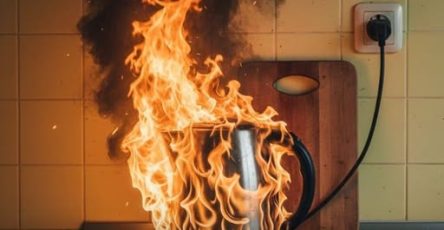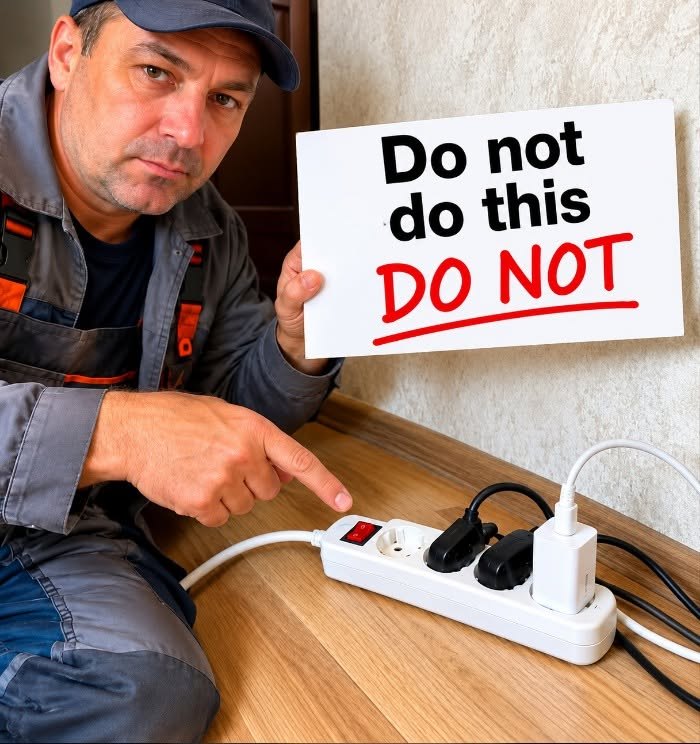
kitchen.
5. Electric oven and tabletop hob
Electric ovens and portable hotplates often operate for extended periods of time at high power.
Conventional household extension cords are often not suitable for such devices. Continuous heavy loads can cause the wires and connections to overheat.
Always follow the manufacturer’s instructions when
connecting. Some equipment may require a properly designed electrical connection.
6. Dishwasher
Your dishwasher uses both water and electricity to operate. Heating the water can consume significant power.
Therefore, a properly grounded, safe wall connection also benefits the dishwasher.
Using an unsuitable extension cord can be particularly problematic if the appliance is operated at a higher power level for a long time.
7. Electric iron
The iron can draw up to 2000 W or more of power while heating up.
If the extension cord’s rated load is less than this,
the cord and connections may overheat.
Therefore, it is best to use the iron from a suitable wall socket. It is especially important not to operate other high-power appliances from the same extension cord at the same time.
8. Refrigerator
A refrigerator usually consumes less energy than a kettle or electric heater, but it is still worth paying attention to